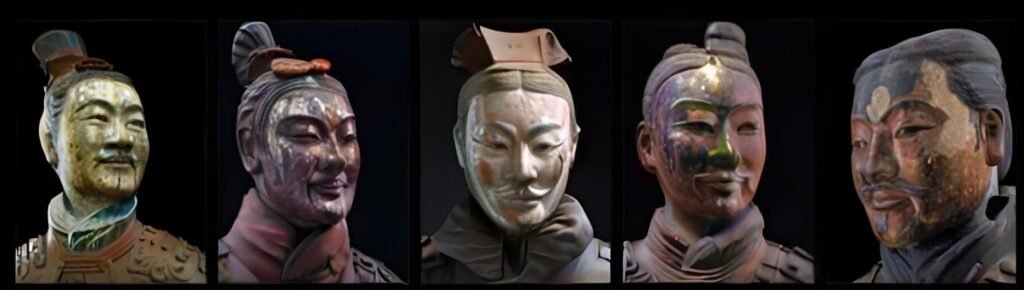
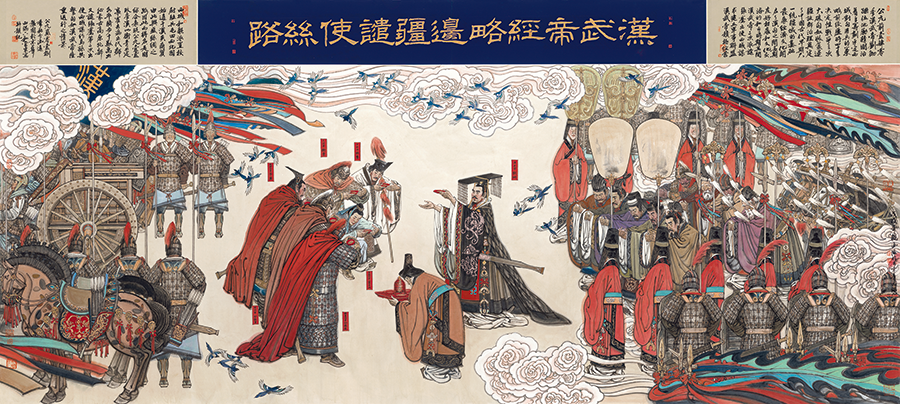

Emperor Wudi of the Western Han Dynasty, reigning from 141 BC to 87 BC, is celebrated for his military conquests, empire expansion, and establishing Confucianism as the state philosophy, marking a period of significant territorial and cultural advancement in China.
Introduction
Emperor Wudi of the Western Han Dynasty (206 BC-AD 24), whose personal name was Liu Che, reigned from 141 BC to 87 BC. He is regarded as one of the greatest emperors in Chinese history due to his military conquests, expansion of the empire, and the establishment of Confucianism as the state philosophy. His reign marked a period of significant territorial expansion and cultural flourishing, which played a vital role in shaping the future of China.
Early Life and Ascension to the Throne
Born in 156 BC, Liu Che was the son of Emperor Jing of Han. Liu Che was named heir apparent largely due to the influence of his mother, Empress Wang Zhi. In 141 BC, he ascended the throne at the age of 15, following the death of his father.
Confucianism and State Governance
One of the most significant legacies of Emperor Wudi’s reign was the promotion of Confucianism as the official state philosophy. Prior to Wudi, Legalism had been the dominant philosophy, emphasizing strict laws and harsh punishments to maintain order. However, Wudi recognized the potential of Confucianism to foster moral integrity and social harmony within the empire.
Under his rule, Confucian principles were integrated into the imperial examination system, which became the primary means of recruiting government officials. This shift in philosophy had a lasting impact on Chinese society, influencing governance, education, and cultural values for centuries.
Economic and Cultural Developments
Emperor Wudi implemented several economic reforms to strengthen the empire’s prosperity. He monopolized essential industries like salt and iron to increase state revenue and reduce the power of wealthy merchants. His reign also saw advancements in agriculture, with the promotion of new farming techniques and irrigation methods to increase productivity.
Culturally, Wudi’s reign was a period of flourishing arts and literature. The emperor himself was a patron of the arts, encouraging the documentation of history and the compilation of important texts. The era witnessed the development of the Han style in art and architecture, characterized by intricate craftsmanship and elaborate designs.
Legacy
Emperor Wudi’s reign left an indelible mark on Chinese history. His military conquests and territorial expansions established the Han Dynasty as a major power in Asia. The adoption of Confucianism as the state philosophy laid the foundation for a system of governance and education that would endure for centuries.
Wudi’s contributions to the economy, culture, and politics of China set a precedent for future rulers and influenced the development of subsequent dynasties. His legacy continues to be celebrated in Chinese historical narratives and remains a subject of interest for scholars studying ancient Chinese civilization.