
The Yellow Emperor, or Huangdi, is a legendary Chinese historical and mythological figure, viewed as a key ancestor of Chinese civilization. Approximately 5,000 years ago, he unified tribes in ancient China and is celebrated as a benevolent ruler with significant cultural contributions.
Introduction
The Yellow Emperor, known as Huangdi, is a legendary figure in Chinese history and mythology, often attributed as the founding ancestor of Chinese civilization. Believed to have reigned nearly 5,000 years ago, he is celebrated as the progenitor of all Chinese people. According to legend, he unified the tribes of ancient China and laid the foundation for the cultural and technological advancements that followed. The Yellow Emperor is a central figure in Chinese mythology and continues to hold significant cultural and historical importance for the Chinese people.
Mythology and Legend
Birth and Early Life
The mythology surrounding the Yellow Emperor is rich and complex, detailing his divine origins and early life. It is said that the Yellow Emperor was born in Xinzheng, located in what is now Henan province, China. His birth was surrounded by miraculous events, and he was considered a deity incarnate, born with special wisdom and strength. Legends describe him as having been raised in a time of chaos, which he overcame through his intelligence and leadership abilities. His birth and early years are emblematic of the divine right and destiny that were believed to guide his eventual rise as a unifying leader.
Role in Chinese Mythology
In Chinese mythology, the Yellow Emperor is revered as a cultural hero and a divine ruler. He is credited with numerous contributions that shaped the early Chinese civilization, including the development of essential technologies and practices. Under his leadership, significant advancements were made in agriculture, medicine, and the creation of Chinese characters. The Yellow Emperor is also associated with the mythical event of riding a dragon to ascend to heaven, symbolizing his divine nature and his role as a bridge between the earthly and celestial realms. His reign is seen as a golden age, where order and prosperity were established, setting a precedent for future generations.
Significant Legends
Several key legends highlight the Yellow Emperor’s wisdom and heroism. One of the most famous is his battle against the rebellious tribal leader Chi You, which resulted in the unification of the tribes and the establishment of the Huaxia civilization, a precursor to the Han Chinese culture. Another prominent legend involves his interactions with famous historical and mythological figures such as the Yan Emperor and the sage Laozi, reflecting his significant influence and revered status in Chinese lore.
Contributions to Chinese Culture
The Yellow Emperor’s contributions to Chinese culture are legendary and multifaceted. He is credited with the invention of essential aspects of Chinese society, including the calendar, traditional Chinese medicine, and the writing system. His reign is associated with the establishment of rituals and practices that became the bedrock of Chinese cultural identity. The Yellow Emperor is also linked to the origins of martial arts and various cultural festivals, reinforcing his lasting impact on Chinese heritage.
Historical and Archaeological Evidence
While the Yellow Emperor is primarily a mythological figure, his influence is undeniable in the historical and cultural development of China. The Mausoleum of the Yellow Emperor in Huangling county, Shaanxi province, is a significant archaeological site that symbolizes his enduring legacy. Although direct historical evidence of his existence is scarce, the cultural practices and historical narratives that reference him have been integral in shaping Chinese identity and history. These stories have been passed down through generations, maintaining his presence in the collective memory of the Chinese people.
Cultural Legacy
Festivals and Celebrations
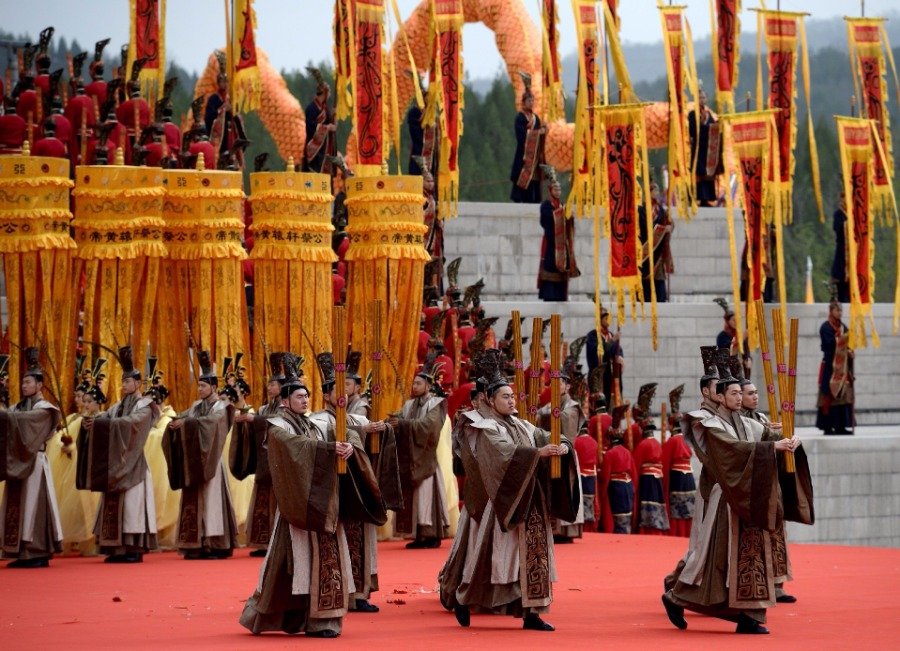
The Yellow Emperor’s legacy is celebrated through various annual festivals and ceremonies, most notably the Tomb-Sweeping Day (Qingming Festival), which honors ancestors and maintains the cultural tradition of ancestor worship. In Huangling county, grand ceremonies are held at the Mausoleum of the Yellow Emperor, attracting thousands of participants from around the world. These events emphasize themes of unity, heritage, and cultural pride, reinforcing the Yellow Emperor’s role as the ancestral figurehead of Chinese civilization.
Representation in Arts and Literature
The Yellow Emperor is a prominent figure in Chinese arts and literature, depicted in countless poems, paintings, and historical texts. His image as a wise and just ruler is often portrayed in traditional Chinese art, and his stories have been a source of inspiration for writers and artists throughout China’s history. The Yellow Emperor’s influence extends beyond literature and art into modern media, where he continues to be a symbol of Chinese cultural identity and national pride.